hero default image
Faculty |
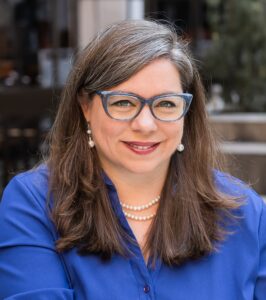
At its May 7–8, 2026 meeting, the Board of Trustees of Columbia Theological Seminary approved the promotion of Mindy McGarrah Sharp to Professor of Practical Theology and Pastoral Care, recognizing her sustained contributions to teaching, scholarship, mentorship, and leadership in theological education and spiritual care.
McGarrah Sharp has served in theological education for more than 16 years, including the past nine years at Columbia, where she currently serves as Lead Professor for Columbia’s Master of Arts in Practical Theology (MAPT) program and previously served as MAPT Program Director. Throughout her time at Columbia, she has played a significant role in shaping students preparing for ministries, chaplaincies, community leadership, and spiritual care across a wide range of contexts.
“Dr. McGarrah Sharp’s promotion reflects Columbia’s appreciation for her scholarship, leadership, and commitment to forming students for thoughtful and compassionate ministry in a complex world. Her work exemplifies Columbia’s commitment to theological education that engages both the life of the church and the realities of the broader world with wisdom, care, and courage. We are proud to celebrate faculty whose scholarship and teaching help shape communities of justice, compassion, and faithful engagement. Professor McGarrah Sharp’s work is a meaningful expression of that calling.”
Rev. Dr. Victor Aloyo, Jr.
President and Professor of Practical Theology
“Learning with so many fabulous students over the past 16 years has been a deep and sustained contribution into the heart of my thinking and pedagogy and growing and learning,” said McGarrah Sharp.
A practical and pastoral theologian, McGarrah Sharp’s work focuses on spiritual care across a range of cultural, institutional, and communal settings. Her teaching and scholarship engage themes including intercultural listening, ethics, trauma, liberation-centered care, pedagogy, conflict transformation, and decolonial practical theology.
A trained clinical ethics consultant, she regularly integrates ethical reflection and practical theology throughout her teaching, scholarship, and public engagement. Her courses at Columbia have included pastoral care, grief, intercultural spiritual care, practical theology, ethics of practice, and immersion learning. She has also led contextual and intercultural learning experiences in the United States, Cuba, India, Nicaragua, and the U.S./Mexico borderlands, helping students engage postcolonial questions of justice, identity, and community with local and global implications.
The promotion comes alongside the release of her third book, Listening for Liberation: Sound Practices of Intercultural Spiritual Care, published by Fortress Press.
Drawing from liberation theology, disability theology, decoloniality, indigenous wisdom, choreography, and sound studies, the book explores how spiritual care practitioners, chaplains, pastors, educators, and institutions can cultivate listening practices shaped by intercultural awareness, justice-centered intersectional attunement, and sustained self-reflective communal engagement. It is already being well received in the field of practical theology, with Dr. Emmanuel Lartey calling it “an indispensable text for anyone who seeks to practice any kind of spiritual care in these incredibly tone-deaf times in the world community,” and Dr. Sheryl Kujawa-Holbrook saying “this book offers both challenge and accompaniment to bring our whole selves to the deep, authentic, and layered work of listening for liberation.”
Rather than approaching listening primarily as an interpersonal skill or devotional practice like many other books on listening, McGarrah Sharp examines listening as a communal and institutional practice shaped by cultural histories, embodied identities, grief, uses and abuses of power, and structures and systems of inequity. Across twelve chapters, the book engages four movements: listening difficulties of misunderstandings, resistances, and griefs; intercultural and intersectional listening contexts; decolonial commitments to listening differently; and ways of practicing listening attentive to movement, power, and feedback as intercultural spiritual care.
“Listening for liberation is not simply about hearing another person well,” said McGarrah Sharp. “It is about cultivating practices and communities capable of discerning where conditions for liberation are being created and what liberation requires over time — especially across differences, complexities, and systems geared toward transforming and healing oppressive structures.”
The book also reflects McGarrah Sharp’s broader vocational commitment to cultivating spaces of belonging, participation, and justice within theological education and spiritual care, regularly demonstrated in her CTS classes. Her work consistently explores how communities, institutions, and individuals practice care in ways attentive to difference, history, and lived experience.
Her previous books include Creating Resistances: Pastoral Care in a Postcolonial World (2019) and Misunderstanding Stories: Toward a Postcolonial Pastoral Theology (2013). In addition to her research and writing, her scholarship and leadership have contributed to broader conversations within theological education and pastoral theology through fellowships, grants, invited lectures, and service with organizations including the Society of Pastoral Theology, the Journal of Pastoral Theology, the Wabash Center for Teaching and Learning in Theology and Religion, the Association of Theological Schools, the American Academy of Religion, and local CPE professional advisory groups.
McGarrah Sharp holds a PhD and MA from Vanderbilt University, a Master of Arts in Religion from Yale Divinity School, and a BA from the University of Virginia. Her doctoral work explored intercultural relationships, psychology, theology, and postcolonial analysis.
At Columbia, she has served on numerous institutional committees and leadership initiatives, including the Executive Committee of the Faculty, the Admissions Committee, the Basic/Master’s Degrees Committee, and multiple curriculum development and program leadership efforts. Colleagues and students alike have recognized her contributions not only through scholarship and teaching, but also through mentorship, collaborative leadership, and sustained engagement with the evolving work of theological education.
The promotion recognizes McGarrah Sharp’s ongoing contributions to pastoral theology, spiritual care, theological education, and the formation of students preparing for ministry and leadership across increasingly diverse and interconnected contexts.
NEW…
At its May 7–8, 2026 meeting, the Board of Trustees of Columbia Theological Seminary approved the promotion of Mindy McGarrah Sharp to Professor of Practical Theology and Pastoral Care, recognizing her sustained contributions to teaching, scholarship, mentorship, and leadership in theological education and spiritual care.
McGarrah Sharp has served in theological education for more than 16 years, including the past nine years at Columbia, where she currently serves as Lead Professor for Columbia’s Master of Arts in Practical Theology (MAPT) program and previously served as MAPT Program Director. Throughout her time at Columbia, she has played a significant role in shaping students preparing for ministries, chaplaincies, community leadership, and spiritual care across a wide range of contexts.
“Dr. McGarrah Sharp’s promotion reflects Columbia’s appreciation for her scholarship, leadership, and commitment to forming students for thoughtful and compassionate ministry in a complex world. Her work exemplifies Columbia’s commitment to theological education that engages both the life of the church and the realities of the broader world with wisdom, care, and courage. We are proud to celebrate faculty whose scholarship and teaching help shape communities of justice, compassion, and faithful engagement. Professor McGarrah Sharp’s work is a meaningful expression of that calling.”
Rev. Dr. Victor Aloyo, Jr.
President and Professor of Practical Theology
“Learning with so many fabulous students over the past 16 years has been a deep and sustained contribution into the heart of my thinking and pedagogy and growing and learning,” said McGarrah Sharp.
A practical and pastoral theologian, McGarrah Sharp’s work focuses on spiritual care across a range of cultural, institutional, and communal settings. Her teaching and scholarship engage themes including intercultural listening, ethics, trauma, liberation-centered care, pedagogy, conflict transformation, and decolonial practical theology.
A trained clinical ethics consultant, she regularly integrates ethical reflection and practical theology throughout her teaching, scholarship, and public engagement. Her courses at Columbia have included pastoral care, grief, intercultural spiritual care, practical theology, ethics of practice, and immersion learning. She has also led contextual and intercultural learning experiences in the United States, Cuba, India, Nicaragua, and the U.S./Mexico borderlands, helping students engage postcolonial questions of justice, identity, and community with local and global implications.
The promotion comes alongside the release of her third book, Listening for Liberation: Sound Practices of Intercultural Spiritual Care, published by Fortress Press.
Drawing from liberation theology, disability theology, decoloniality, indigenous wisdom, choreography, and sound studies, the book explores how spiritual care practitioners, chaplains, pastors, educators, and institutions can cultivate listening practices shaped by intercultural awareness, justice-centered intersectional attunement, and sustained self-reflective communal engagement. It is already being well received in the field of practical theology, with Dr. Emmanuel Lartey calling it “an indispensable text for anyone who seeks to practice any kind of spiritual care in these incredibly tone-deaf times in the world community,” and Dr. Sheryl Kujawa-Holbrook saying “this book offers both challenge and accompaniment to bring our whole selves to the deep, authentic, and layered work of listening for liberation.”
Rather than approaching listening primarily as an interpersonal skill or devotional practice like many other books on listening, McGarrah Sharp examines listening as a communal and institutional practice shaped by cultural histories, embodied identities, grief, uses and abuses of power, and structures and systems of inequity. Across twelve chapters, the book engages four movements: listening difficulties of misunderstandings, resistances, and griefs; intercultural and intersectional listening contexts; decolonial commitments to listening differently; and ways of practicing listening attentive to movement, power, and feedback as intercultural spiritual care.
“Listening for liberation is not simply about hearing another person well,” said McGarrah Sharp. “It is about cultivating practices and communities capable of discerning where conditions for liberation are being created and what liberation requires over time — especially across differences, complexities, and systems geared toward transforming and healing oppressive structures.”
The book also reflects McGarrah Sharp’s broader vocational commitment to cultivating spaces of belonging, participation, and justice within theological education and spiritual care, regularly demonstrated in her CTS classes. Her work consistently explores how communities, institutions, and individuals practice care in ways attentive to difference, history, and lived experience.
Her previous books include Creating Resistances: Pastoral Care in a Postcolonial World (2019) and Misunderstanding Stories: Toward a Postcolonial Pastoral Theology (2013). In addition to her research and writing, her scholarship and leadership have contributed to broader conversations within theological education and pastoral theology through fellowships, grants, invited lectures, and service with organizations including the Society of Pastoral Theology, the Journal of Pastoral Theology, the Wabash Center for Teaching and Learning in Theology and Religion, the Association of Theological Schools, the American Academy of Religion, and local CPE professional advisory groups.
McGarrah Sharp holds a PhD and MA from Vanderbilt University, a Master of Arts in Religion from Yale Divinity School, and a BA from the University of Virginia. Her doctoral work explored intercultural relationships, psychology, theology, and postcolonial analysis.
At Columbia, she has served on numerous institutional committees and leadership initiatives, including the Executive Committee of the Faculty, the Admissions Committee, the Basic/Master’s Degrees Committee, and multiple curriculum development and program leadership efforts. Colleagues and students alike have recognized her contributions not only through scholarship and teaching, but also through mentorship, collaborative leadership, and sustained engagement with the evolving work of theological education.
The promotion recognizes McGarrah Sharp’s ongoing contributions to pastoral theology, spiritual care, theological education, and the formation of students preparing for ministry and leadership across increasingly diverse and interconnected contexts.

