hero default image
I don’t think I ever used the term “lifelong learner” before joining the CTS community eight years ago. Learner, yes. Student, most definitely, but never a lifelong learner. Nowadays, I can’t go a day without seeing, reading, or typing the phrase.
A few years ago, Dr. Helen Blier, Associate Dean of Lifelong Learning (see what I mean), wrote a CLL cornerstone article identifying three qualities that all lifelong learners (you can start the tally now) share: curiosity, proactive learning, and self-awareness.
Here’s how they’ve played out in my time as an employee and student of Columbia Theological Seminary.
Once upon a time, in 2018, I started my first day in Media and Marketing for the CLL.
As the new kid on the block, I had tons of questions. “What does this acronym mean?” “What’s a judicatory?” Where can I find___”? “Who does____?”, Can we use___?” and Why isn’t there___?
Thankfully, CLL colleagues and directors never shy away from questions, as it’s often an indicator that learning is happening. The willingness to be curious about “the way things are done around here” made space to try new things in every area of my work. But of course, that meant I had to ask more questions.
Since lifelong learners are naturally curious, we appreciate space to fail. Failure creates learning opportunities, offering the chance to experiment to discover what works and what doesn’t.
As a staff member for non-degree continuing education programs, I have a front-row seat to how curiosity and experimentation interact within the CLL. Jazz/Preaching or Healing/Gold may seem unlikely pairings, but a willingness to say “let’s try this” led the way for participants to make deeper connections with their peers and community.
I wholeheartedly agree that facing the unpredictable, full of wonder, is part of why lifelong learners keep coming back for more. This inquisitiveness ultimately led me to assume the dual role of staff member and student. I thought, “I work in lifelong learning. Why not walk the walk too?”
Lifelong learners take responsibility for their learning.
One thing my colleagues will likely vouch for is that I’m not afraid to ask for what’s needed, to figure out how something works (or why it’s not working).
I ask myself the same questions as I locate the growing edges within, and when and how to address them. These tendencies have served me well throughout my career —I’m not one to settle for “I don’t know.” Instead, I’m more inclined to say, “I don’t know, but I can find out,” which in turn means I’m also a big believer in “practicing what you preach.”
As a student, I write and think about this using the phrase “I believe ___. Therefore, I live____.”
For example, I believe in innovation. Therefore, I live with an air of “why not give it a try?” I believe God equips us for all kinds of skills (Exodus 35:35). Therefore, I believe in multi-faceted ministry and vocation.
Additionally, the forward-thinking nature of lifelong learning fuels my inner visionary. As one Lifelong Learning Director said, “[Lifelong learning] is one of the futures of theological education. I do think that the future of ministry–in the biggest and broadest sense–and spiritual care will require work outside of denominational confines and the capacity for institutions to recognize the durable skills of ministry.” Taking responsibility for your learning is not only proactive, but a sign of faithfulness to the good work we are created to do (Ephesians 2:10).
I’ve never been one to toot my own horn.
I’d much rather celebrate and encourage others than hype what I’m doing/have done.
I’m immensely humbled by God’s grace towards me, which in turn makes me keenly aware of what God has graced me for, and, sometimes more importantly, what God has not.
The data show that lifelong learners have the capacity for ongoing critical reflection on their practice.
I know who I am. I know what I bring to whatever table that’s before me.
Still, I’m also unafraid to share my areas of improvement, the things that may never be strengths for me but that I’m nevertheless willing to face in some way. As both a staff member and a student, I’m consistently asking myself how I can do this better and what I need more support with.
As a staff member, Dr. Blier knows numbers are not my friends.
They may like me, but I haven’t historically liked them. She knows this because I’ve repeatedly said as much.
And yet, as my work and responsibilities expanded within CLL, I gave my brain permission to face its bewildering terrain, knowing my shortcomings would be met with support and patience from the department.
And you know what? Keeping up with my corner of the budget in a learning lab like lifelong learning at CTS hasn’t been half bad.
I’m in the middle of my second degree with CTS. While writing this post, I made a poignant observation: the lifelong-learner qualities—curiosity, proactive learning, and self-awareness—kick into overdrive in my student role.
I have a fond memory of a brief exchange between Dr. McGarrah Sharp (shameless plug: she’s leading a Communications course in January, btw) and me while discussing my e-portfolio for the MAPT program.
I reached out about expectations for the project. Over the phone, I confessed, “I know I have a tendency to go overboard on these things…” And without missing a beat, she exclaimed: “I love that about you!”
I don’t know about you, but nothing lights a fire under my backside like being reminded that we’re meant to shine (Matthew 5:16).
Growing up, my dad often said: “We never graduate from learning.” Lifelong learning isn’t just a way to fill a knowledge gap – it’s a way of life marked by curiosity, agency, and reflective practice.
To quote my ninth-grade lit teacher, Mr. Whittaker, we have these “big beautiful brains” for a reason. Lifelong learners understand the care, resources, and opportunities to use them.
P.S. I said lifelong learning (or a variation of the phrase) 18 times in the post. And if you enjoyed this post, I’m leaning further into the lifelong learner life by teaching a course, Straightforward Social Media January 2027.
Click HERE to register!
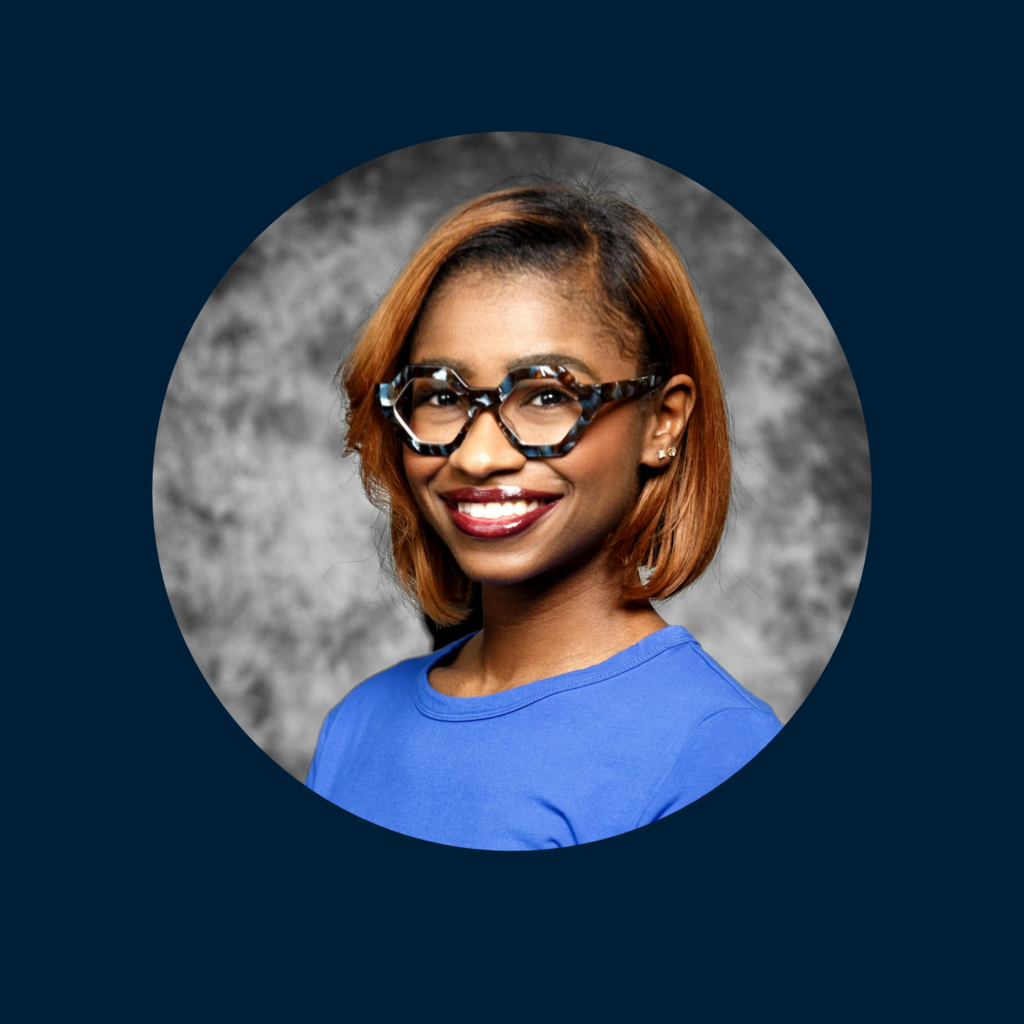
Chassidy Goggins supports the needs of organizations and high performers through administration, digital marketing, and media communications. She does this because she believes that collaboration and innovation, coupled with strategy, are key to advancing vision. She is currently the Media and Marketing Coordinator for the Center of Lifelong Learning at Columbia Theological Seminary, a doctoral student in the school’s educational ministry program (DEdMin), and a 2024 graduate of its Master’s in Practical Theology (MAPT) program.

